
Background
Our Street Tree Strategy helps protect and increase our street tree canopy across Monash. This is something we know is very important to our residents because of the role it plays in cooling, shading and beautifying our streets.
We are inviting residents of Appletree Drive to let us know what type of tree you'd like to see us plant in your street.
Click 'Follow' at the top of this page to receive updates on the project, including the results of voting.
Why does Council identify trees for removal?
When assessing a street as part of our Street Tree Strategy, we flag trees for removal that are dead, dying (assessed as having less than five years useful life), diseased or dangerous (pose an inappropriate level of risk to people or assets that cannot be reasonably be managed).
These trees are then replaced where appropriate and we also look for other opportunities to plant trees on the street.
Appletree Drive, Glen Waverley
Our arborists have completed individual tree assessments based on the above criteria. We will be:
- Removing 12 trees, and
- Planting 21 trees.
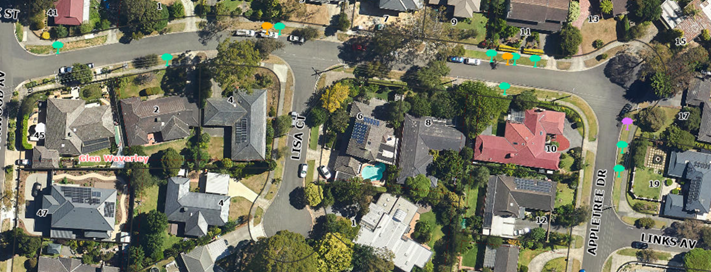
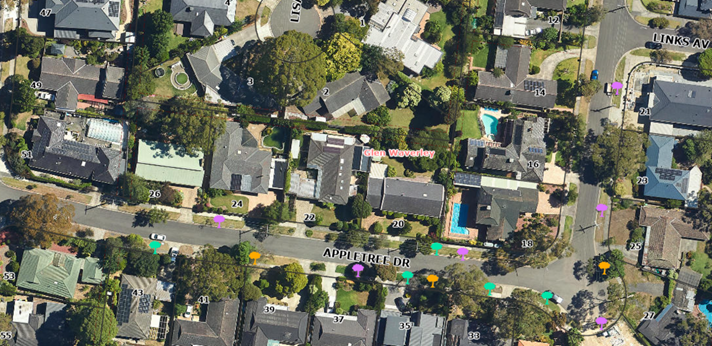
 Tree to be removed and replaced
 New tree
 Tree removed with no replacement
Species for replanting
Callistemon Harkness (Callistemon 'Harkness') to be planted on the side of the street with powerlines.

Size - height x width: 5m x 3
Foliage: Evergreen
Yellow Box (Eucalyptus melliodora) - to be planted on the side of the street with no powerlines.
This tree is a medium to tall grower, best known for its unusual bark, which varies from smooth to rough all the way down the trunk. Often the bark varies, presenting an array of colours including grey, yellow, red and brown and, occasionally, can be very dark and rough. Very fragrant, white flowers appear during the warmer months.
Size - height x width: 10-15m x 8-10m
Foliage: Evergreen
Coral Gum (Eucalyptus torquata) to be planted on the side of the street with powerlines.

A small, adaptable evergreen tree with pretty coral-pink flowers. Native to the poor and shallow soils of the Goldfields in Western Australia, the Coral Gum tolerates dry summers and poor soils yet rewards with a conspicuous show of flowers in spring or summer.
The coral-pink or creamy flowers are also known for their abundant nectar and bird attracting. The latent hardiness and smaller adult size of the tree makes it a popular choice as a street tree, but it also works well as a feature tree in water-wise gardens and native plantings. Best in full sun.
Can grow in a variety of soils including poor, shallow or rocky. Tolerates dry summers and urban environments. Grows fast in suitable conditions. Needs good drainage.
Size - height x width: 4-10m x 2-6m
Foliage: Evergreen
Silver Stringy Bark (Eucalyptus cephalocarpa) - to be planted on the side of the street with no powerlines.
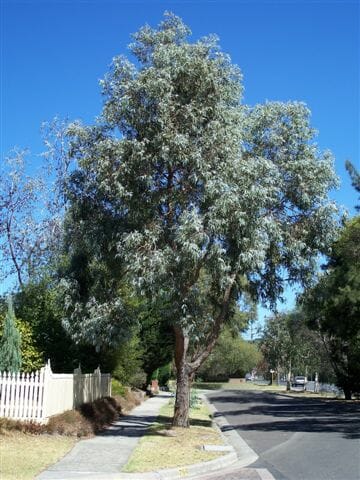
A beautiful medium size tree with a straight trunk and thick fibrous grey brown bark and a dense canopy of dull grey-silvery blue foliage. Clusters of creamy white flowers appear from autumn to winter followed by woody fruits. An adaptable tree that can tolerate waterlogged conditions during winter and drying out in summer.
Size - height x width: 8-20m x 5m
Foliage: Evergreen
Timeline
-
Timeline item 1 - complete
Residents invited to provide feedback
By 20 February 2026.
-
Timeline item 2 - incomplete
Affected trees removed
By 30 April 2026.
-
Timeline item 3 - incomplete
Preferred species planted
By 30 June 2026.